A complete guide to the Hilton Honors rewards programme
 Simon
20 Sep 2026

Last Updated: 28 Sep 2026
Points Pointers
Search for pages and actions
SimonLast Updated: 28 Sep 2026
If you stay at Hilton hotels with any regularity, there’s a good chance you’re leaving value on the table if you don’t understand Hilton Honors properly.
On the surface, the Hilton Honors rewards programme works on a simple loop: you stay at a Hilton property, earn Hilton Honors Points, use those for future stays, and earn status along the way. But it’s more nuanced than that in practice, so it’s important to understand the decisions that separate good value from a poor one before you start collecting seriously.

Hilton Honors is Hilton's loyalty programme, open to anyone and free to join. Members earn Hilton Honors Points from stays across Hilton's 28 brands, and from several of its partners, including credit and debit cards, car rental, and dining. You can then redeem points for hotel stays, though other redemption options exist as well.
The programme has two types of rewards running side by side: Points and elite status. Points are the currency you earn and spend, while status is earned through nights or stays and comes with perks such as upgrades, breakfast, and bonus Points.
They complement each other, but do different jobs. Points pay for the reward while status makes the trip nicer. Joining is free, which means there’s essentially no downside to signing up, even if you only stay at Hilton once or twice a year. You’ll earn points regardless, and they don’t expire as long as your account shows at least one activity every 24 months.
One important habit to build from the start is to book directly through Hilton. Third-party booking sites may show competitive room rates, but bookings made through them often don’t earn points and may not include elite member benefits. Direct always beats third-party if points and status matter to you.
Here’s a quick recap:
| Question | Answer |
|---|---|
| Is membership free? | Yes |
| What do you collect? | Hilton Honors Points |
| What can you redeem them for? | Hotel stays and other rewards |
| Do points expire? | After 24 months of account inactivity |
It’s important to understand the 24-month inactivity rule, because most people misunderstand it. Your points don’t expire 24 months after they’re earned. They expire only if your entire account has had no qualifying activity whatsoever for 24 consecutive months. A single eligible earn or redeem resets the clock. The full list of what counts as activity is covered in the points expiry section below.

Hilton currently has 28 brands across the full range of hotel categories. Here are some of the top ones:
The key point to remember is that there’s no brand-based tier system for redemptions. A night at a Hampton in central London during peak season might require more points than a night at a Curio property in a less popular city. Always search by destination and date. Don’t assume a luxury brand will automatically cost more.
The base earning rate at most Hilton brands is 10 Points per US dollar of eligible spend. Some brands have different rates, so check before you book. Elite members earn bonus points on top of the base rate, with the bonus percentage scaling with status:
A quick example of what this could look like: spend $200 on an eligible stay as a Gold member and you earn 2,000 Base Points plus an 80% bonus of 1,600 Points, giving you 3,600 Points before any promotions. Add a live Hilton promotion, and the total can be even higher.
Promotions can make a big difference in the Hilton Honors rewards programme, and seasoned collectors know better than to ignore them. Double- or triple-point deals come around often, and they can turn an ordinary stay into a semi-luxury one.
The annoying bit is that you usually need to register before check-in. Hilton will not normally add the bonus later if you forget to do it, even if your stay would’ve qualified. A good habit is to check the promotions page before every stay, register for anything of interest, then book.
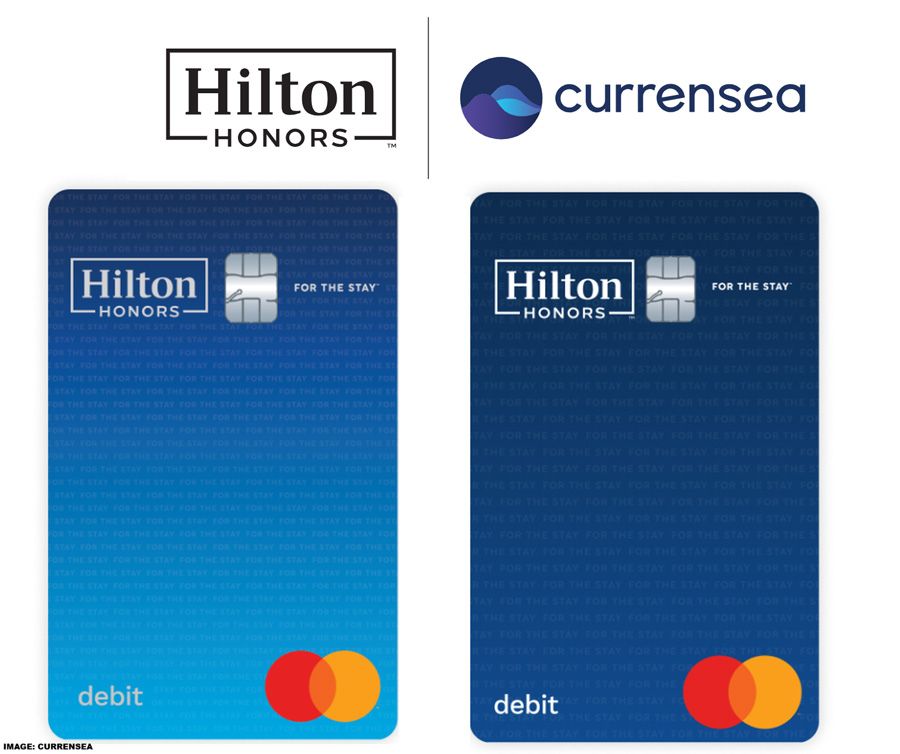
UK collectors also have the Hilton Honors Debit Card as a simple way into the programme. It earns points on everyday spending without requiring another credit card application, which suits anyone who’d rather not add another card to the wallet. Earning rates and welcome bonuses can change, so check the latest terms before applying.
Hotel stays aren’t the only way to keep your points balance ticking over. Hilton also lets you earn through partners such as dining, car hire and Lyft in eligible markets. The earnings here are usually fairly small, but they still have their uses. A few partner points can help keep an account active and stop you from drifting into Hilton’s 24-month inactivity window.

You earn Hilton status through nights, stays or eligible spend over the calendar year. Hilton shook things up in 2026 by adding a new tier, so the qualification targets now look like this:
| Status | Nights | Stays | Eligible Spend |
|---|---|---|---|
| Member | 0 | 0 | N/A |
| Silver | 10 | 4 | $2,500 |
| Gold | 25 | 15 | $6,000 |
| Diamond | 50 | 25 | $11,500 |
| Diamond Reserve | 80 | 40 | $18,000 |
You don’t need to tick every box. Hit the nights target, the stays target or the eligible spend target, and that’s enough to qualify for the tier.
Silver is the entry point to elite status, and it’s relatively easy to reach for anyone who makes a handful of Hilton stays a year. The headline benefit is the 5th Night Free on eligible reward stays, plus a 20% Points bonus on hotel spend. It’s a nice-to-have tier, but not one worth going out of your way to chase.
If you’re able to hit gold, we recommend taking the Hilton Honors programme seriously. The benefits at this tier are:
The breakfast benefit alone can be worth a lot of money on a multi-night stay. Two breakfasts per day for a week can easily offset the effort required to reach Gold. Gold requires 25 nights, 15 stays, or $6,000 in eligible spend per calendar year.
Diamond unlocks:
Diamond requires 50 nights, 25 stays, or $11,500 in eligible spend. Concentrating your stays at Hilton to reach Diamond makes sense if you stay 50+ nights a year across hotel brands. The question at lower stay counts is whether the incremental benefits justify the extra nights over Gold.
Diamond Reserve is Hilton’s new top tier, and the bar is pretty high. You’ll need 80 nights or 40 stays, plus $18,000 in eligible spend. The important bit is that you need both.
The additional benefits over Diamond include Confirmable Upgrade Rewards, which allow Diamond Reserve members to confirm room upgrades before arrival rather than waiting for space-available assignment at check-in, and guaranteed 4 pm late checkout, subject to programme terms.
Whether Diamond Reserve is worth pursuing depends almost entirely on how often you stay at Hilton and whether the guaranteed upgrade and late checkout benefits have practical value in your travel pattern. At 80 nights a year, Hilton is already your dominant hotel chain. If that’s not the case, Diamond Reserve is probably not worth engineering stays to reach.

Hilton publishes a long list of programme benefits. Most of them don’t matter as much as three specific ones. Here they are ranked by practical value to a points collector.
The 5th Night Free is the best feature of the Hilton Honors benefits package. Silver, Gold, Diamond, and Diamond Reserve members all qualify. The mechanics are: book five or more consecutive nights at the same property using a Standard Room Reward, and the fifth night costs zero Points.
Let's imagine a scenario where you spend five nights at a property priced at 50,000 Points per night that would normally cost 250,000 Points. If you take advantage of the 5th Night Free, you only pay 200,000. In other words, you've saved up 50,000 Points, which at even a modest valuation means saving real money. The benefit continues to apply beyond five nights, with every fifth night free. A 20-night stay would include four free nights.
Here are the catches, though:
This means the 5th Night Free is most valuable for longer stays at expensive properties with high cash rates, such as a Waldorf Astoria or Conrad resort.
Space-available upgrades at Gold mean exactly what they sound like: you may receive a room upgrade at check-in if a better room is available. This is not a guarantee of a suite or a premium room. You may receive no upgrade at all at busy properties, but upgrades to noticeably nicer rooms are common at quieter ones, mid-week. However, do not book a Gold stay expecting an upgrade. Just treat it as a welcome bonus when it happens.
The breakfast benefit is one of the main reasons collectors target Gold. Gold members in the US get a daily food-and-beverage credit instead of a set breakfast perk. Outside the US, the benefit is usually a continental breakfast, though the exact rules depend on the brand and property. Some hotels leave the perk out altogether, so be sure to check before you book. It’s much nicer to know in advance than find out when the breakfast bill lands.
Hilton doesn’t publish a fixed cash value for its points. The value you receive depends on the hotel, the date, the cash price of the room, and the number of points required. It varies a lot, which is both the challenge and the opportunity of the programme.
Here’s the calculation to run before any redemption:
(Cash price of room − any taxes or fees still payable) ÷ Points required × 100 = pence per point.
Here are two examples:
The difference between those two examples illustrates why Hilton Honors points value is not fixed, and why searching specific dates at specific properties before deciding whether to use points is so important. The same number of points can represent wildly different cash value depending on the hotel and the date.
A good benchmark is around 0.3–0.4p per point. Get above that, and you’re usually onto a good redemption. The best cases tend to come at pricey luxury hotels on busy dates, where your points can sometimes stretch to 1p each or better.

This is one of the most important questions in the Hilton Honors beginner guide, and the answer isn’t always obvious. Here’s a decision framework we recommend:
| Use Points When | Pay Cash When |
|---|---|
| Cash prices are unusually high | Rooms are cheap |
| You’re staying five consecutive nights | A strong Hilton promotion is running |
| You’re booking an expensive luxury hotel | You’re trying to earn elite nights |
| You’re getting strong value per Point | The points price is disproportionately high |
Using points will almost always beat paying cash if you’re staying five consecutive nights at the same property, because the 5th Night Free adds 20% to your effective points value on that stay. A redemption that looks borderline at four nights will become clearly worthwhile at five.
Hilton also allows a Points + Money option, which lets members use a combination of Points and cash via a slider tool at hilton.com. This can be useful when you have a partial points balance, but it doesn’t qualify for the 5th Night Free, so treat it as a separate decision from a full points redemption.

The Hilton website is the easiest place to check reward availability. Search your destination and dates, switch on the ‘Use Points’ filter, and you’ll see points prices alongside the cash rates.
Pay close attention to the Standard Room Reward. That is usually the rate you want, especially if you’re planning to use the 5th Night Free benefit. You may see cheaper-looking points options elsewhere in the results, but they can come with different rules. The Standard Room Reward is the cleanest benchmark for comparing properties.
As discussed earlier, Gold requires 25 nights, 15 stays, or $6,000 of eligible spend in a calendar year. There are several routes to get there, and the right one depends on your existing travel pattern.
The simplest way to get there is by staying at Hilton hotels. If you already clock up 15 or more hotel stays a year across different chains, moving more of them to Hilton could be all it takes to reach Gold without adding any extra hotel spend.
Some Hilton credit cards in other markets include complimentary Gold status as a card benefit. The UK Hilton Honors Debit Card earns points rather than conferring status directly. Check the current card benefits at the time of application.
Hilton sometimes runs status match and challenge programmes that allow members with elite status in other hotel loyalty schemes to fast-track to a Hilton tier. These change in availability and terms, so checking directly with Hilton at the time you want to pursue this is the best approach.
A mattress run is when you book a hotel purely to earn elite nights, even though you have no real need to stay there. It can work, but only if the numbers make sense. Before you start booking cheap local Hiltons for the sake of status, work out what it will cost to reach Gold and what you’re likely to get back in breakfast and other perks over the next year.
If the math stacks up, fair enough. If the numbers don’t work, just stick with Hilton for the stays you were going to book anyway and let Gold come in its own time.
Here’s a simple decision tree to help you decide:
Points expire after 24 consecutive months of account inactivity. The keyword is consecutive. A single qualifying activity resets the clock entirely. Hilton currently says the following count as activity:
That last option is the easiest: registering for a promotion, even if you don’t go on to complete it, counts as account activity and resets the 24-month window. The simplest way to keep an account alive is to register for a promotion every year or two. It takes less than a minute.
Hilton allows members to transfer points to other Hilton members, pool them within a household, and gift them to other members. That way, you can consolidate a balance ahead of a joint redemption, though fees and limits apply.
Hilton points can also be converted to airline miles with a range of airline partners. The conversion rates are generally poor: the typical ratio means you receive much less airline currency than the points you give up would deliver in hotel value.
We’d rarely recommend transferring Hilton Points to airlines. It should be treated as a last resort for a balance you cannot otherwise use. The opportunity cost is the key consideration. If you have 100,000 Hilton points that could cover two or three nights at a good property, converting them to a relatively small number of airline miles is almost certainly the worst outcome.
Here are the use cases where Hilton Honors points value tends to be strongest:
Conrad and Waldorf Astoria resorts in destinations such as the Maldives, the Caribbean and Bali can be great places to use Hilton points, especially when cash rates are painful. A five-night stay makes the deal even better because the 5th Night Free kicks in to helps your points stretch further.
Major city Hilton properties can show strong points value at times of high cash demand, such as peak conference periods or event weeks. The trick is to search for the same dates on both a cash and a points basis and compare them. Cities with multiple Hilton properties sometimes show more competition in points pricing.
DoubleTree and Curio hotels near ski resorts or national parks can be great uses of points during peak season, when cash rates climb. But you may be better off paying cash outside peak season.
Waldorf Astoria hotels in places like the Maldives, Paris and New York are the sort of redemptions points collectors love to daydream about. Cash rates can be eye-watering, so using points can feel like the far more sensible choice.
Hilton's suite and connecting-room inventory at resort properties can be a great option for families, especially when cash rates for larger rooms are high. The 5th Night Free is useful here: a family staying 10 nights at a resort property saves two free nights, which can be worth several hundred pounds.
A five or ten-night stay at an expensive luxury hotel is where this perk can really pay off. Stay five nights, and you’re effectively getting one of them free. Use it somewhere charging £500+ a night, and the savings can be hard to ignore.

While there’s no exhaustive list, here are some good rules of thumb:
Join. Membership is free, and there’s no downside to earning points on stays you were going to make anyway. Even a handful of Hilton nights a year will eventually add up to a balance worth something.
Hilton Honors becomes much more valuable once you can reach Gold. The breakfast benefit, the upgrade potential, and the 5th Night Free on reward stays can collectively be worth hundreds of pounds in a year if you’re making 20 or more Hilton stays a year.
Hilton Honors starts to get interesting when you stack the different parts of the programme. A good promotion, elite status and 5th Night Free can make a pricey hotel stay much easier to justify with points.

Hilton Honors and Avios can be used for different parts of the same trip. Use Avios to get there, then let Hilton Points take care of the hotel bill. You don’t need one loyalty programme to do all the work. In fact, you’ll often get better value by letting each one handle the part it does best.
Cash rates at Maldivian resorts routinely exceed £800–£1,000 per night. A five-night stay using Points at a Conrad or Waldorf property, with the 5th Night Free applied, can save the equivalent of an otherwise eye-watering hotel bill. Combined with an Avios Business Class flight, the total trip cost in cash terms may be a fraction of what it would be without either programme.
This is how to use Hilton Honors most effectively in a points strategy: not as a standalone programme to maximise in isolation, but as the hotel layer of a broader earning and redemption plan built around Avios for flights.
Is Hilton Honors worth it? The short answer is yes, with some conditions. The Hilton Honors beginner guide conclusion is fairly simple. Hilton Honors is one of the better programmes for earning points if you stay at hotels and want your spending to count for something. The 5th Night Free is a feature that no other major hotel programme matches in quite the same way. Gold status is achievable for anyone making 15 hotel stays a year, and the breakfast benefit at non-US properties has practical daily value.
The programme's biggest weakness is the absence of a fixed award chart. You need to check each redemption individually. That takes a few minutes more, but the upside is that it creates opportunities: a hotel with a high cash rate and a reasonable points price can deliver excellent value that a fixed chart would never have produced.
Knowing how to use Hilton Honors well is largely a matter of consistently practising three habits: registering for promotions before every stay, calculating the points value before every redemption, and using the 5th Night Free whenever a five-night stay is on the table. Do those three things and the programme will absolutely deliver.
Affiliate Disclaimer
Reward Flight Finder (RFF) may receive a commission if you book a Hilton stay through a link on this page. RFF may also receive a commission if you apply for and are approved for a Hilton Honors Debit Card or Hilton Honors Plus Debit Card through a link on this page. This does not affect the properties, services or products we feature or how they are presented.
We aim to provide accurate and up-to-date information; however, prices, availability, card benefits and terms change frequently. You should always check the official Hilton website for current hotel prices and booking terms, and the official Currensea website for the latest card terms, fees and eligibility criteria before you book or apply.
Card approval is subject to status, and terms and conditions apply. You should consider whether either card is suitable for your financial circumstances before applying.