How to Sleep on a Plane: 12 Tips for Real Rest in Economy
 Kayleigh
21 Sep 2026

Last Updated: 13 Oct 2026
Flight Club
Search for pages and actions
KayleighLast Updated: 13 Oct 2026
It’s 2am somewhere over the Sahara. The cabin lights went out hours ago, everyone around you appears to be unconscious, and you’ve now tried the neck pillow, the reclined seat and both sides of the headrest. The little plane icon is crawling across the map for the ninth time. You spent your Avios to get here, you land in five hours, and you’d quite like to arrive as a functioning human being.
Here’s the good news. Almost everything that decides how well you sleep on a long-haul flight is settled before the doors close: the flight you booked, the seat you chose, what’s in your hand luggage, and what you did in the twelve hours beforehand. A lie-flat bed helps enormously. It isn’t the only thing that works.
What follows walks through the journey in the order it actually happens, for anyone sitting in Economy. If you’re specifically after how to sleep on a long haul flight in Economy, sections one to three are where most of the difference gets made. There’s also the part most sleep articles skip entirely: your Avios strategy doesn’t have to stop the moment you book an Economy reward seat.
Departure time is the biggest single lever on your sleep, and most people never pull it because they’re filtering by price. Book a British Airways reward flight with Avios and you’re not tied to the cheapest cash fare of the day, which frees you to pick whichever service suits your body clock.
Four rules of thumb:
Several of the most sought-after BA long-haul routes are natural overnighters, which makes them the best flight time for sleeping without any planning at all. Here’s what an Economy reward seat costs on four of them.
| Route (return from London) | Sleep opportunity | Economy Avios from (off-peak return) | Taxes and fees from | Cash price from (guide) |
|---|---|---|---|---|
| New York (JFK) | Classic overnight coming home, roughly 7 hours eastbound | 55,000 Avios | £150 | £283 to £380 |
| Cape Town | Evening departure, morning arrival, almost no time difference | 66,000 Avios | £190 | £435 to £740 |
| Bangkok | Overnight eastbound, roughly 11 hours | 77,000 Avios | £240 | £569 to £700 |
| Tokyo (Haneda) | Long eastbound sector with a big time shift, so sleep really counts | 77,000 Avios | £240 | £770 to £980 |
Avios figures are per person, return, off-peak, pulled from the Avios Calculator in August 2026. Peak dates cost more: New York rises to 66,000 Avios, Tokyo to 88,000. Taxes and fees sit on top of the Avios, and cash prices are an honest guide only. Price your own route for exact figures.
Booking any of this needs a British Airways Club account, which is free to open, and your BA Club membership number goes on the reservation. Most long-haul BA reward bookings also use Reward Flight Saver, which caps the cash payable on top of your Avios instead of leaving it open-ended.
To compare actual departures rather than guessing, Flight-by-Flight Search lists every scheduled BA service on a route, which ones hold reward seats, and the aircraft operating each.
RFF Gold Members can filter searches and Availability Alerts by time window, which is how you end up on the 21:40 instead of the 13:05.
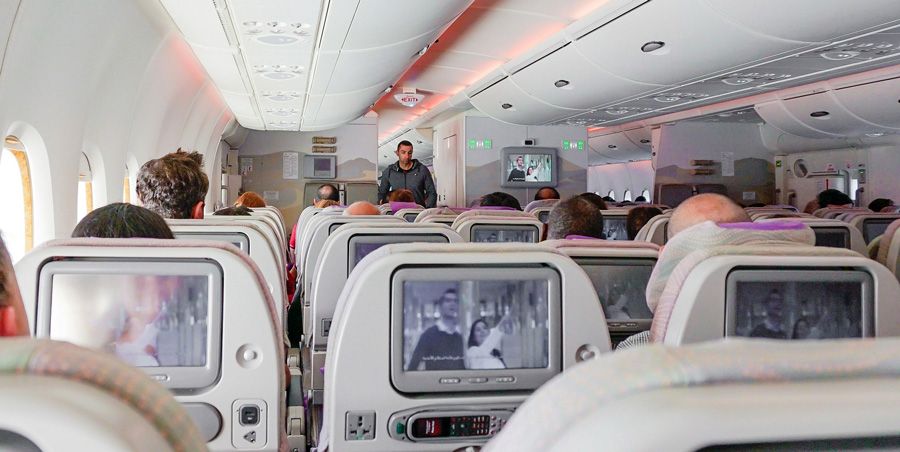
People agonise over this at the seat map and then get it wrong. No seat is universally correct, but one is correct for sleeping.
| Seat | What you get | What you give up | Verdict for sleeping |
|---|---|---|---|
| Window | Something solid to lean on, control of the blind, nobody climbing over you | Disturbing one or two people to get out | Best. The wall is the closest thing economy has to a headboard |
| Aisle | Freedom to stand, stretch and reach the toilet unasked | Trolley traffic, elbows, being woken to let neighbours out | Second. Pick it if you know you’ll need to move |
| Middle | Two armrests by convention, and little else | No wall, no easy exit, neighbours both sides | Avoid when sleep is the goal |
Check the aircraft before you commit. A window seat on a short-haul A320 in 3-3 layout puts one person between you and the aisle. On a long-haul 777 in 3-3-3, it’s two, which changes the maths entirely across eleven hours. Configurations vary by aircraft and by route, so distrust any blanket claim that a given row is always best. We’ve weighed up the trade-offs at more length in choosing between an aisle and a window seat.
Worth knowing: BA charges to reserve a seat in advance on most Economy fares, reward bookings included, unless you hold Silver or Gold status in BA Club or you’re in a premium cabin. Where the right seat decides whether you sleep, that fee is often the cheapest comfort you’ll buy all trip.
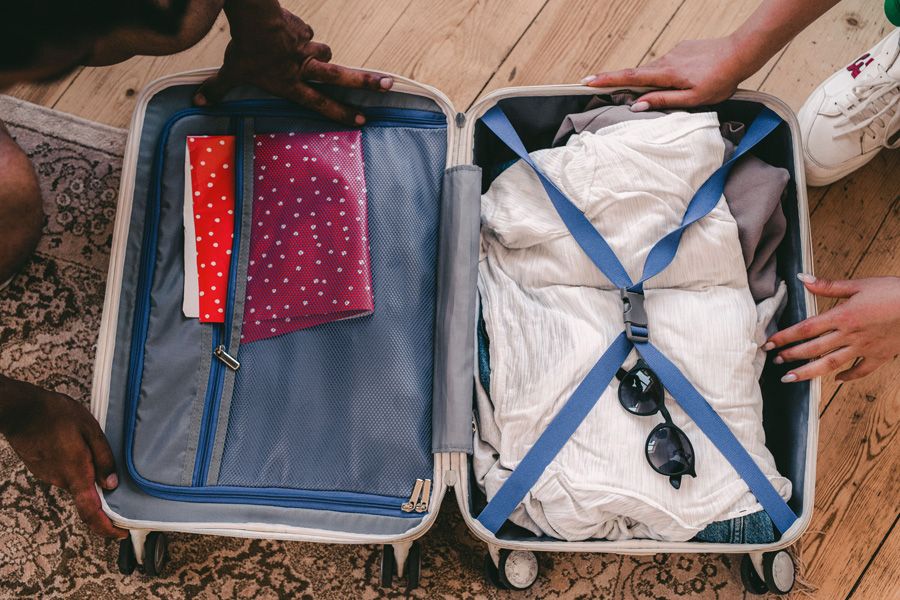
Economy gives you a seat. Everything else that lets you sleep, you bring. Keep this lot in the personal item under the seat in front rather than the overhead locker, so you’re not standing in the dark rummaging at midnight.
Our carry-on packing list covers the full set, including what people most often forget.
Reaching the gate exhausted, dehydrated and running on airport coffee is definitely not the goal in long-haul travel. The NHS advises resting properly before you travel and, where it’s practical, nudging your sleep schedule towards the destination time zone in advance.
The CDC’s jet lag guidance puts a number on it: shift your bedtime roughly an hour a day across the two or three days before departure, later for westward travel and earlier for eastward. Work and family don’t always allow it, but even a single night moves the needle.
The other half is a decision rather than a technique. Board thinking "I’m going to sleep on this flight" instead of "I’ll watch six films and see what happens". People who intend to sleep set themselves up for it. People who intend to watch films watch films, then land wrecked.

Ask around and you’ll be told to sleep whenever you can. Wrong instruction. Sleep when it’s night where you’re going.
The CDC builds its entire approach around timing sleep, meals and light exposure to the destination time zone, and it defines jet lag disorder as something that kicks in once you cross at least two of them. Change your watch and your phone on boarding, then behave as though you’ve already arrived. If it’s 3am in Tokyo, that’s bedtime, whatever your body insists.
Direction matters as well. The CDC puts westward adaptation at roughly 1.5 hours a day against about 1 hour a day going east, because our internal clock naturally runs slightly longer than 24 hours. Flying west to New York, staying up late works with your body. Flying east to Bangkok, you’re pushing against it, and that’s precisely where sleeping on the plane earns its keep.
A glass of wine feels like it helps. It doesn’t. Alcohol shortens the time it takes to nod off, then fragments the sleep that follows and dehydrates you at the same time, which is why the CDC recommends minimising it when you’re managing jet lag. The NHS puts it more bluntly: don’t drink too much alcohol or caffeine on the flight.
Caffeine is the sneakier of the two. It has a half life of roughly five hours, hence the CDC’s advice to stop about six hours before you intend to sleep. A coffee at Heathrow before an 8pm departure is fine. A coffee served with dinner at 10pm is why you’re still awake at 2am.
Neither point means going without. One drink with your meal, then water for the rest of the flight, is a compromise most people can live with.
Economy isn’t a bare bench, and BA’s World Traveller cabin has more built in than most passengers ever discover. Every applicable long-haul aircraft gives you an adjustable headrest, lumbar support and recline, plus a soft cushion and a blanket. Newer cabins add a six-way headrest with adjustable ears, the difference between your head lolling into the aisle and being held gently in place, along with movable middle armrests that matter enormously when a child needs to lean on you.
Three minutes of setup pays for itself:
Sleeping upright is genuinely hard, and there’s a physiological reason. During REM sleep your muscles temporarily lose tone, which is exactly when your head starts sliding sideways and you jolt awake. That’s not switchable, but it’s workable.
Sleep Foundation cites research showing that both the quantity and quality of seated sleep improve as recline angle increases, so use every inch your seat offers. Support your neck properly, keep your spine in a natural line rather than curled, and give yourself something solid on at least one side. That last point is the real argument for the window.
One caution worth taking seriously. Long stretches of sitting still raise the risk of deep vein thrombosis, so walk the cabin while you’re awake anyway, flex your ankles and calves in the seat, and stay hydrated. Compression socks make sense on very long sectors. None of it needs to interrupt your sleep if you do it before you settle and after you wake.
BA serves a starter, main and dessert in World Traveller on long-haul services, with mid-flight snacks and a second meal on the longest sectors. It’s decent, and it also arrives whenever the schedule dictates rather than when your body wants it.
If the tray lands at what counts as bedtime in your destination, you’re allowed to skip it. Eat something light before boarding instead, and ask the crew to leave you undisturbed. Heavy meals and sugar close to sleep make that first stretch of deep sleep harder to reach, and the first stretch is the one that decides how you feel on landing. Keep a snack in your bag if you know hunger will find you, so you eat on your own terms.
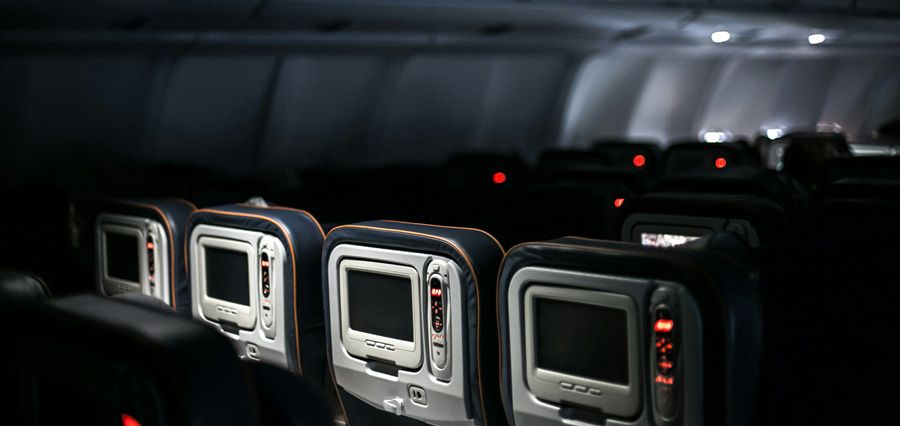
Light is the strongest single signal your body clock reads, and the screen 30cm from your face is a light source. Blue light from phones and seat-backs suppresses melatonin, the hormone telling your body it’s night. Give yourself an hour without screens before you plan to sleep, put the mask on, and lower the blind if you’re by the window.
For noise, noise-cancelling headphones handle the constant engine drone that earplugs struggle with, while earplugs deal better with sudden human noises. Plenty of people carry both. If silence unsettles you, low steady audio works better than podcasts or films, because there’s nothing in it to follow.
Some nights it simply won’t happen, which is normal, and panicking about it makes things worse. This is the section people skip, and it’s the one that decides how you feel walking off the aircraft.
Stop checking the time. Clock-watching turns a bad night into an anxious one, and the flight map is the same thing wearing a disguise. Then treat quiet rest as a legitimate outcome in its own right. Eyes closed, headphones on, body still and warm isn’t sleep, but it beats three films and a bag of crisps by a distance, and people who rest this way land noticeably better than people who abandon the idea entirely.
Slow breathing helps where anxiety is the thing keeping you up. The 4-7-8 pattern, in for four seconds, hold for seven, out for eight, is widely recommended for exactly this.
A note on medication, because it comes up constantly. Everything here stops at practical travel behaviour. The NHS states that medicines aren’t usually needed for jet lag, warns that sleeping tablets carry a risk of dependence, and does not recommend melatonin on the NHS for jet lag because the evidence isn’t strong enough. Anyone considering a sleep aid should talk to a pharmacist or their GP, not read a travel blog.
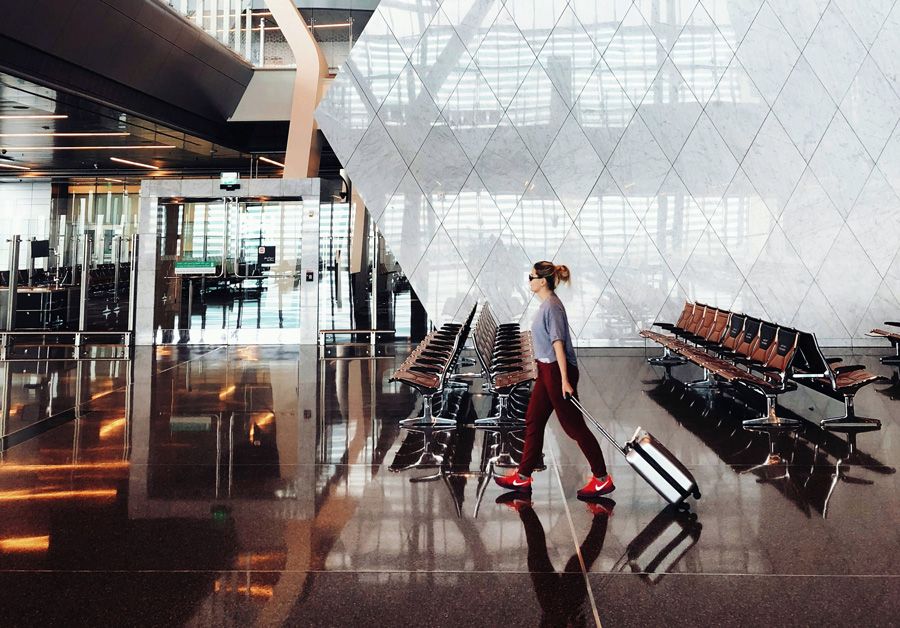
What you do in the first few hours on the ground decides how much of your in-flight sleep actually counts.
Most Avios advice assumes the goal is a flat bed. Plenty of collectors will never have 200,000 Avios spare for two Business Class seats, and that’s fine. Avios still change your night in the air, in four specific ways.
They let you choose the flight, not the fare. Paying cash, the 06:20 departure is often £180 cheaper and you take it. Redeeming, the Avios cost is identical across the day, so you can pick the overnight service that suits your body clock. That’s worth more sleep than any gadget in your hand luggage.
They make direct routing affordable. Connections often price lower in cash and identically in Avios, which quietly removes the temptation to save £90 by adding a 2am transfer.
They free up a budget for the small things that work. Take New York above. Spending 55,000 Avios plus £150 rather than a £283 to £380 cash fare leaves room for a seat reservation, decent noise-cancelling headphones and a lounge pass, all of which do more for your sleep than a slightly cheaper ticket.
They put a step up within reach. Where sleep genuinely matters on a particular trip, World Traveller Plus is the affordable version of a better night, and a Companion Voucher or part-pay with Avios brings it closer still.
| Cabin (London to Cape Town, return) | Avios from (off-peak) | Taxes and fees from | Cash price from (guide) | What it changes for sleep |
|---|---|---|---|---|
| World Traveller (Economy) | 66,000 Avios | £190 | £435 to £740 | Roughly 31 inches of pitch on most aircraft, adjustable headrest, cushion and blanket. No lounge access unless you hold status or pay. |
| World Traveller Plus (Premium Economy) | 104,500 Avios | £460 | £900 to £1,400 | Roughly 38 inches of pitch, deeper recline, a footrest and a smaller, quieter cabin. Still no lounge access as standard. |
| Business Class with Club Suite | 198,000 Avios | £599 | £2,800 to £4,500 | A 79 inch fully flat bed, direct aisle access and a sliding privacy door. Lounge access included on eligible itineraries. |
Avios and taxes from the Avios Calculator, August 2026, per person, return, off-peak. Seat pitch figures are typical rather than published by BA. Cash figures are a guide only and move with date and demand. Premium Economy does not normally include lounge access, so treat that as a Business Class benefit rather than something arriving with the extra legroom. Our Club Suite page covers what the front cabin gives you.
Be honest about the trade. Roughly 38,500 extra Avios for World Traveller Plus is excellent value on a twelve hour overnight where you work the next morning, and poor value on a daytime hop where you were going to read a book anyway. We’ve run the numbers route by route in when the step up to World Traveller Plus is worth it.
All of this assumes you can find the seat in the first place. BA guarantees a minimum of eight Economy, two World Traveller Plus and four Business Class reward seats on each long-haul flight, released around 355 days before departure. On popular routes they go quickly, and the overnight departures go first precisely because everyone wants them.
That’s what Availability Alerts exist for. Set one on your route and cabin, and Reward Flight Finder watches on your behalf, then tells you by email and SMS the moment a seat appears. Gold Members can narrow an Alert to a specific time window, which is how you get the 21:40 to Cape Town rather than whatever happens to be left.
Comfortably is a stretch. Acceptably is achievable. Most people who manage it are doing four things: an overnight departure, a window seat, an eye mask and earplugs, and no alcohol after the meal service. None of those require a bigger seat.
A window seat, in a row where both the seat in front and yours recline, on the aircraft your route actually uses. The window gives you a wall and control of the blind, and nobody needs to climb over you. Choose the aisle only if you know you’ll need to move regularly, if you’re prone to feeling boxed in, or if a tight connection awaits.
As many as fall inside night-time at your destination, rather than a fixed number. On an eleven hour eastbound sector that might be six or seven hours. On a westbound daytime flight it might be a 30 minute nap and nothing else, because staying awake is what helps you adjust.
A departure an hour or two before your normal bedtime, landing in the morning. That leaves time to eat, settle and fall asleep at roughly the hour your body expects, and drops you into daylight at the other end.
Yes. The NHS recommends being well rested before travelling, and arriving already exhausted tends to produce anxious, broken sleep rather than deep sleep. An afternoon nap before an evening departure is fine. A sleepless night beforehand is not a strategy.
No. It gets you under faster, then breaks up everything that follows while dehydrating you. The CDC recommends minimising alcohol when managing jet lag, and the NHS advises against drinking too much on a flight.
Control what’s free or cheap: departure time, seat, the kit in your bag, and what you eat and drink. A window seat on an overnight flight with an eye mask and earplugs beats a badly timed daytime flight in a bigger seat more often than people expect.
Pick your route, then pick your flight rather than accepting the first one with a seat going. If the departure you want has no reward availability today, that’s normal and it isn’t the end of it. Set an Availability Alert on the route, cabin and time window you actually want, and let Reward Flight Finder tell you the moment something opens.
Your Avios strategy doesn’t have to end when you book an Economy seat. Used well, it’s the first and best thing you do for your sleep. For more Avios travel tips, the hidden value of BA reward flights and using your Companion Voucher are the natural next reads.
Affiliate Disclaimer
Some links in this article are affiliate links. If you make a booking or purchase through them, Reward Flight Finder may receive a commission at no extra cost to you. Our recommendations remain editorially independent.