From page to plane: 10 literary destinations worth visiting with Avios
 Kayleigh
25 Aug 2026
Last Updated: 24 Sep 2026
Avios Destinations
Search for pages and actions
KayleighLast Updated: 24 Sep 2026
Long before aeroplanes, automobiles, and trains made distances shrink, books served as a portal to places most readers could only dream of seeing. We're all familiar with that feeling when we finish a book, close it, and sit with a distinct sense that we've just left a place we were not quite ready to leave. The streets of Paris that Hemingway describes with such precision, you can almost smell them. The Nile that Christie makes glamorous and dangerous in equal measure. The Indian forests where Kipling places a wolf-raised boy with such confident detail that you don’t doubt a word of it for the length of the story.
Literary travel inspiration has always worked this way. Great books construct destinations in your mind's eye that make you want to walk the same streets and see whether the place looks like the picture you built in your head. Sometimes it does. Sometimes it’s even better.
With this article, we want to plant that seed of curiosity and adventure in your mind through an Avios travel inspiration guide to ten of the best literary destinations in the English-language canon. Each destination is so thoroughly claimed by the book that it’s become part of the collective consciousness. You can’t picture one without the other.
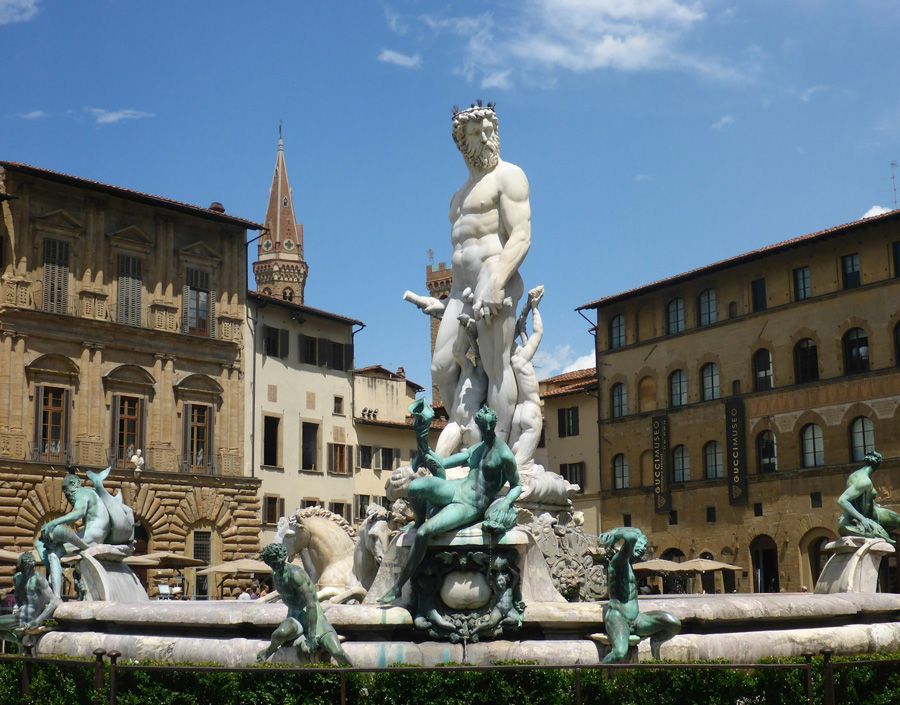
It’s very easy to empathise with Lucy Honeychurch, the central character in E.M. Forster's A Room with a View. The feeling of stepping outside in a new city where social constraints no longer hold you back is one of liberation, and one we can all relate to. In Forster's words, Florence then becomes everything that the polite, restrictive Edwardian English society is not.
All the places mentioned in the book are still there. The Piazza della Signoria, where Lucy Honeychurch witnesses a stabbing and is caught by George Emerson as she faints, is one of the most extraordinary open-air spaces in Europe. It’s flanked by Cellini's Perseus holding the head of Medusa, Michelangelo's David in replica, and the Neptune Fountain that Forster's characters gather around.
The Loggia dei Lanzi, where Lucy sits to recover herself, is still an open-air sculpture gallery free to walk into. The hotel from the 1986 Merchant Ivory film, Hotel degli Orafi on the Lungarno degli Archibusieri, is still available to book. You can stay in the suite that looks out over the Arno and Ponte Vecchio exactly as Forster imagined his pensione view.
You can fly from London to Florence on an off-peak Economy return for 26,000 Avios plus £2 per person.
Find available reward seats with British Airways and Iberia.

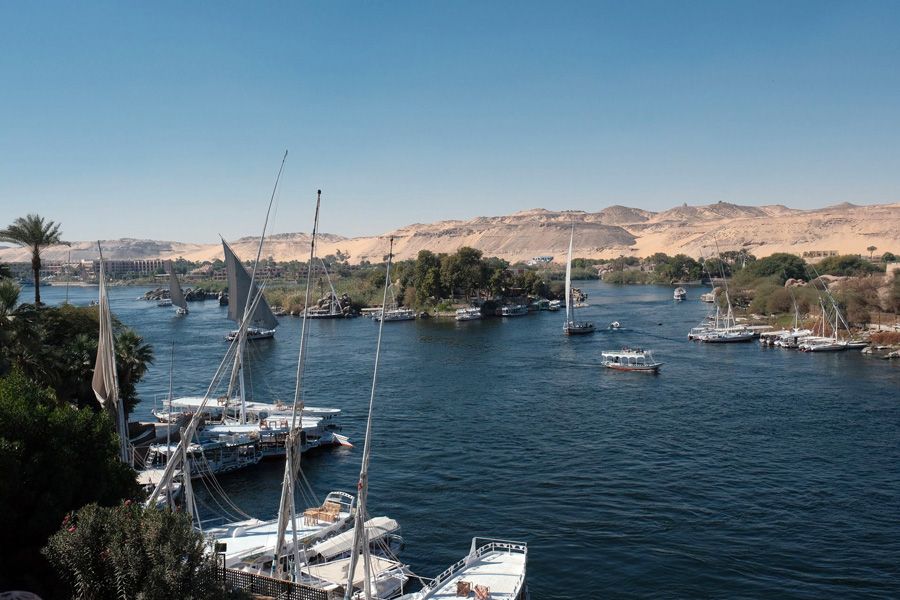
You don't need to solve a murder to experience Egypt. Just managing the heat and history is enough to transport you completely.
Christie published Death of the Nile in 1937 based on her extensive travels in Egypt with her archaeologist husband, Max Mallowan. Most of it was written in the top-floor suite of the Old Cataract Hotel in Aswan, where she could stare across the Nile at Elephantine Island and the feluccas moving through the narrow river channels below. And while a lot of water has passed through the Nile and the world has moved on, if you look closely, you can relate to the words of Poirot in the novel when he describes the view: “It enchants me. The black rocks of Elephantine, and the sun, and the little boats on the river.” The hotel is still open. The view is unchanged.
Find available reward seats with British Airways and Iberia.
Christie's Egypt is one of the great examples of a book making a destination glamorous. The Nile cruise at the heart of the novel, which moves south from Aswan through Luxor and Karnak before reaching the cliff temples of Abu Simbel, has become one of the most rewarding travel experiences for lovers of literary fiction. Abu Simbel, where one of the novel's most important scenes plays out against the immense statues of Ramses II, should be on your must-visit list whether or not you’ve read the book. Luxor Temple and the Valley of the Kings combine Christie's literary backdrop with some of the most important ancient history on Earth.
An off-peak Economy return from London to Cairo or Luxor costs 30,000 Avios plus £102 per person.
The Island opens with a boat crossing. A young woman, her long hair blown by the Aegean wind, is being taken to Spinalonga: a small island in the Gulf of Elounda off Crete's northeastern coast that served as one of Europe's last active leper colonies, finally closed in 1957. She knows she will not be coming back.
Hislop's novel was published in 2005 and quickly became a bestseller in the UK. It spans four generations of a Cretan family haunted by the island, and it’s literary travel inspiration at its most persuasive: a book so deeply rooted in its location that readers began making the journey to Crete to make the same boat crossing.
You can reach Spinalonga by boat from Elounda, Plaka, or Agios Nikolaos. The crossing takes around thirty minutes. You enter through Dante's Gate on the island itself, the twenty-metre tunnel through which lepers arrived, knowing it was likely the last passage they would ever make. The ruined church, hospital, disinfection room, and cemetery are all still standing. The contrast between the island's dark history and the extraordinary beauty of the surrounding Cretan coastline is exactly what Hislop describes: a place that holds tragedy and beauty in the same view.
Find available reward seats with British Airways and Iberia.
If you’re a true fiction lover, you’ll go beyond the resort strips. Elounda is a quiet harbour town. Agios Nikolaos, a short drive away, is an attractive Cretan town with a lake connected to the sea by a narrow channel. Cretan food, dakos, fresh fish, local olive oil and excellent wine sit well above the Greek-resort average.
An off-peak Economy return from London to Crete costs 30,000 Avios plus £2 per person.
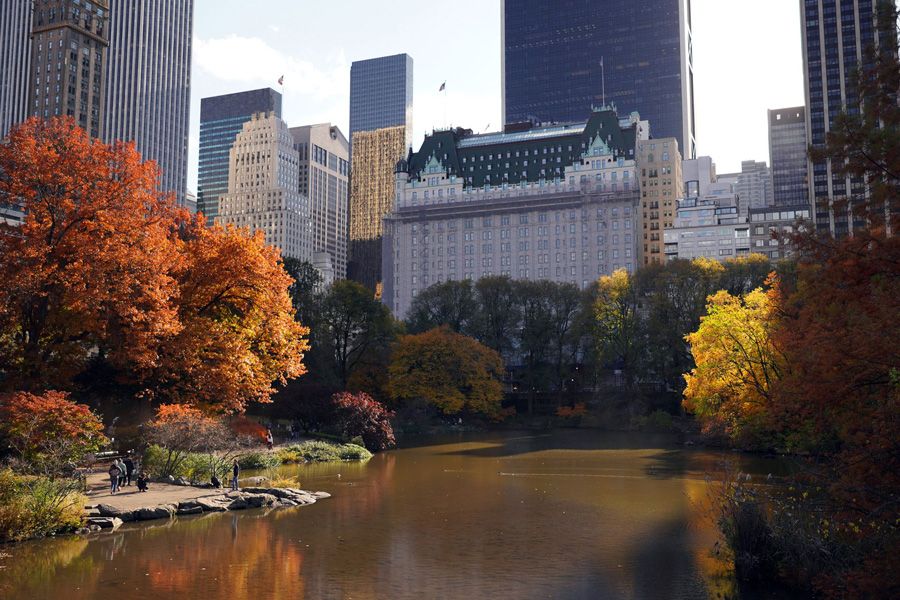
New York is many things to many people, depending on their dreams and hopes. Set in the era of The Roaring Twenties, Fitzgerald's New York is a city of two halves. Manhattan has its towers, hotel suites, and old-money restraint. Long Island is where the new rich throw parties large enough to swallow the night whole.
Jay Gatsby's mansion sits on the fictional West Egg, modelled on the Gold Coast communities of Nassau County, and his green light blinks across the water toward Daisy's dock on East Egg. The novel is saturated with the geography of aspiration: the valley of ashes between the Eggs and Manhattan, and the Plaza Hotel, where the confrontation between Gatsby and Tom Buchanan takes place, the New York of 1922 rendered in a prose style that has never quite been matched for the sheer atmosphere it creates.
Modern visitors can follow the novel's geography with reasonable precision. The Plaza Hotel on Fifth Avenue, where Fitzgerald himself stayed and where Gatsby's key confrontation scene is set, still occupies the corner of Central Park South. The Long Island communities that inspired East and West Egg, Sands Point and Kings Point, still contain the kind of gilded architecture the novel describes. The Jazz Age atmosphere Fitzgerald captured is harder to locate, but not impossible to find. Certain stretches of the Upper East Side still carry the residue of that particular world.
Find available reward seats with British Airways and Iberia.
You can book an off-peak Premium Economy return from London to New York for 93,500 Avios plus £350 per person.
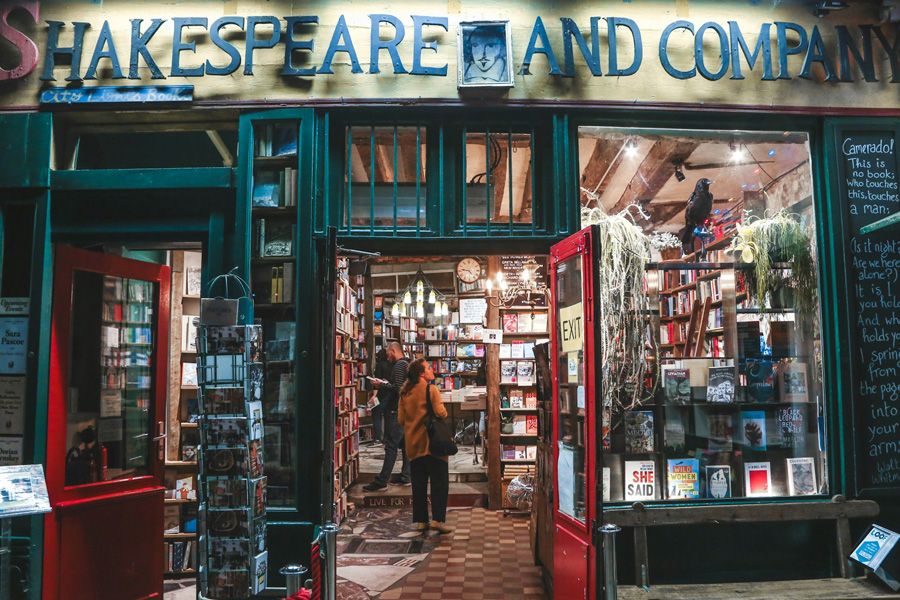
“If you are lucky enough to have lived in Paris as a young man,” Hemingway wrote to a friend in 1950, “then wherever you go for the rest of your life it stays with you, for Paris is a moveable feast.”
A Moveable Feast, published posthumously in 1964, is his memoir of the years he spent in the city in the 1920s, writing in cold rooms in the Latin Quarter, borrowing books from Sylvia Beach at Shakespeare and Company, eating at zinc-topped bars, and living the life of a young writer in post-war Paris when the exchange rate made it possible to live well on almost nothing.
The amazing thing about Hemingway's Paris is how intact it still is. Shakespeare and Company still stands on the Left Bank, having been relocated from its original Rue de l'Odéon address, but if you can brave the long waiting lines, it continues Sylvia Beach's tradition as a sanctuary for anglophone writers and readers. Café de Flore on Boulevard Saint-Germain, where Hemingway wrote and people-watched, still serves coffee at marble-topped tables under the same art deco ceiling. Brasserie Lipp across the street, where he ate potato salad and drank large beers, still operates with its original 1926 interior. Les Deux Magots, La Closerie des Lilas on Montparnasse, the cafes he describes by name are all still there. No other city on this list has preserved its literary geography this well.
Find available reward seats with British Airways and Iberia.
An off-peak Economy return from London to Paris costs 20,000 Avios plus £2 per person.
Before E.M. Forster's A Passage to India or even Gregory David Roberts' Shantaram, children and grown-ups alike came to see the mysterious and exotic India through the words of Rudyard Kipling and the eyes of his most famous character, Mowgli.
The actual India that inspired the fictional story behind Mowgli is even more fascinating than the story we've all come to love. Kipling wrote The Jungle Book in 1894 in Vermont, drawing not from personal experience of the forests he described but from the detailed accounts of British forest officers who’d spent years in central India’s Seoni district. His primary sources were Robert Armitage Strendale's semi-autobiographical Seonee: Camp Life on the Satpuras, published in 1870. The forest Strendale documented is identifiable, almost feature by feature, in the landscape of what is now the Pench Tiger Reserve in Madhya Pradesh.
Standing at the edge of the Pench River at dawn and watching a herd of spotted chital deer drink from the water, knowing this is the scene that populated Kipling's imagination from four thousand miles away, is a literary experience with no real equivalent. The gorge where Mowgli defeats Shere Khan in the final story is a real place - a ravine in the forest that Pench shares with Kanha Tiger Reserve to the north, where sloth bears, tigers, and leopards still move through the same dry deciduous woodland Kipling named.
Find available reward seats with British Airways and Iberia.
India is one of the strongest Avios long-haul flights in the British Airways programme. Business Class to India compares well against cash fares, and the wildlife reserves of Madhya Pradesh are best reached via Nagpur for Pench or Jabalpur for Kanha.
Book an off-peak Business Class return reward seat from London to India costing 198,000 Avios plus £499 per person for an unforgettable adventure.
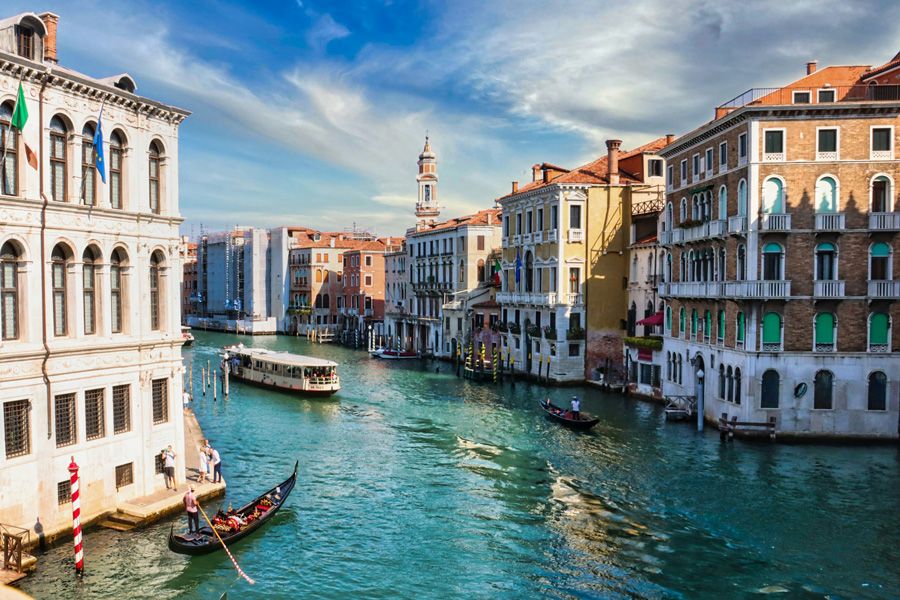
Venice is the most literary city in the world by most measures. It has generated more writing than any comparable city of its size. Shakespeare set Othello and The Merchant of Venice here without ever visiting. Henry James produced some of his finest late work in Ca' Alvisi overlooking the Grand Canal. Byron swam the length of the Grand Canal on a bet.
Find available reward seats with British Airways and Iberia.
Thomas Mann's Death in Venice, published in 1912, is among the most atmospheric evocations of the city ever written. A German writer in late middle age arrives to escape creative paralysis, and the city itself, beautiful and slightly decaying, becomes the agent of his undoing.
Mann's Venice is the city of sirocco and sea fret, of hotel terraces above the lagoon and the slow crossing by vaporetto to the Lido. The Lido itself, where his protagonist takes his beach chair each day, is largely unchanged. It’s still reachable by water bus, still possessing the slightly out-of-season melancholy that Mann describes so exactly. The Grand Canal, the Byzantine and Gothic architecture that crowds its banks, the back calle where you can walk for ten minutes and see no other tourist - all of it is there.
An off-peak Economy return from London to Venice costs 26,000 Avios plus £2 per person.
Out of Africa opens with one of the most celebrated first lines in modern literature: “I had a farm in Africa, at the foot of the Ngong Hills.” Writing as Isak Dinesen, Blixen ran a coffee farm in colonial Kenya from 1913 to 1931, and the memoir she wrote of those years, published in 1937, is a portrait of a landscape so specific and beautiful that it’s shaped how the world imagines Africa ever since. Blixen describes the Ngong Hills, the wide savannah plains, and the quality of light at altitude on the African plateau with such precision that readers arrive in Nairobi already knowing what to look for.
Find available reward seats with British Airways and Iberia.
The Karen Blixen Museum, in the Nairobi suburb that bears her name, occupies the original farmhouse where she lived and wrote. The house has been restored to its 1914 condition, and the views from the garden toward the Ngong Hills look exactly as she describes them. The Great Rift Valley that’s visible on the drive from Nairobi toward the Maasai Mara is another Blixen landscape, the kind of scale that hits visitors in the chest the first time they see it.
Flying to Africa is not as hard as it sounds, just book an off-peak Business Class return reward flight from London to Nairobi for 198,000 Avios plus £499 per person and step inside the pages of your favourite book.
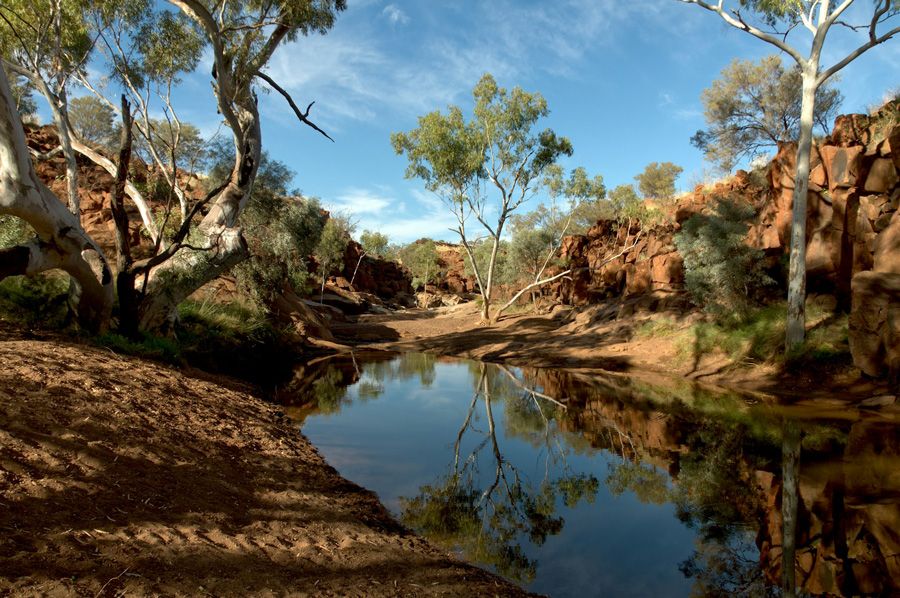
Nevil Shute's A Town Like Alice, published in 1950, is one of the great endurance stories in English-language fiction: a young Englishwoman, Jean Paget, who survives the Japanese occupation of Malaya during World War II, is eventually reconnected with an Australian soldier she met during the war, and travels to find him in the remote Australian Outback.
The contrast Shute draws between the grey drizzle of post-war England, the ordeal of Malaya, and the vast sunlit indifference of the Australian interior is one of the novel's most powerful effects. Alice Springs, the closest town to the Outback landscapes Shute describes, is both a destination and a state of mind.
Find available reward seats with British Airways and Iberia.
Alice Springs sits almost exactly in the centre of Australia, roughly 1,500 kilometres from the nearest coast in any direction. The Red Centre spreads out around it: Uluru, Kata Tjuta, Kings Canyon, the MacDonnell Ranges. The drive between Alice Springs and the rock is three hours of flat red desert with mountains forming and dissolving at the horizon. It’s a landscape on a scale that takes some adjustment, which is exactly what Shute describes when his English heroine arrives and has to recalibrate her understanding of distance and time.
Flying from London to Australia on an off-peak Business Class return reward seat costs 319,000 Avios plus £799 per person.
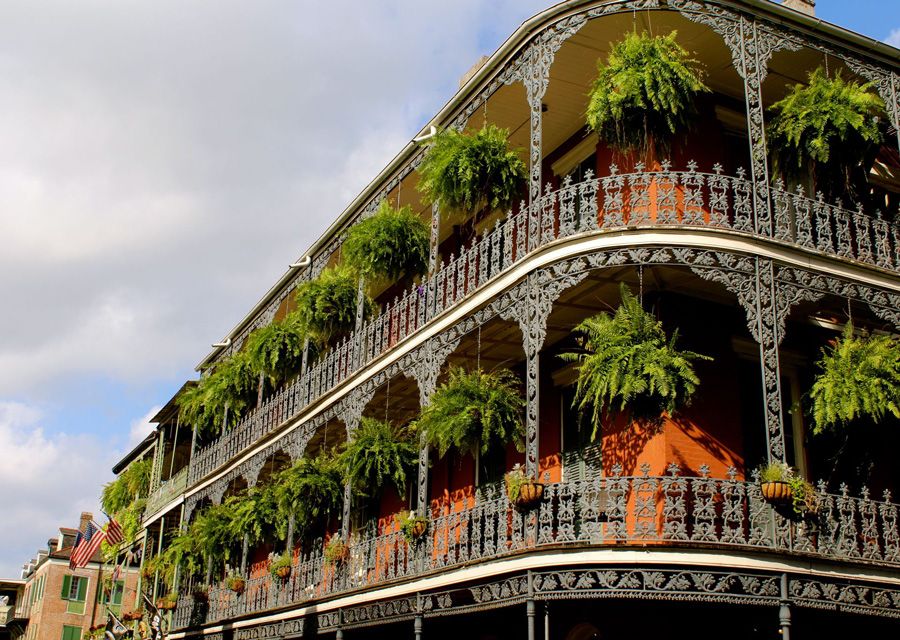
No city on this list is more inseparable from a single work than New Orleans is from A Streetcar Named Desire. Williams wrote the play between 1945 and 1946, spending long stretches in the French Quarter and drawing the city's atmosphere directly into the script. It premiered on Broadway in December 1947.
The subtropical heat, the smell of jasmine and decay, jazz bleeding through shuttered windows, a culture that’s formally American and yet entirely its own thing: none of this is the backdrop in the play. It’s material. Blanche DuBois arriving at the Elysian Fields address in the Faubourg Marigny and finding it nothing like what she imagined is, among other things, a story about New Orleans itself; the gap between the city's mythology and its reality, and why people keep arriving anyway.
Find available reward seats with British Airways and Iberia.
The French Quarter, where Williams lived and set the play, is the most intact historic urban district in the United States. Bourbon Street is the obvious entry point, but not the best argument for the neighbourhood. The Quarter’s side streets, the Frenchmen Street music venues in the Marigny, the antebellum architecture of the Garden District, and the City of the Dead's above-ground cemeteries are where the city's real character is to be found. The St. Charles Avenue streetcar still runs, costs around a dollar in either direction, and comes with one of the great public transport views in the world.
An Off-peak Business Class return reward seats from London to New Orleans costs 198,000 Avios plus £499 per person.
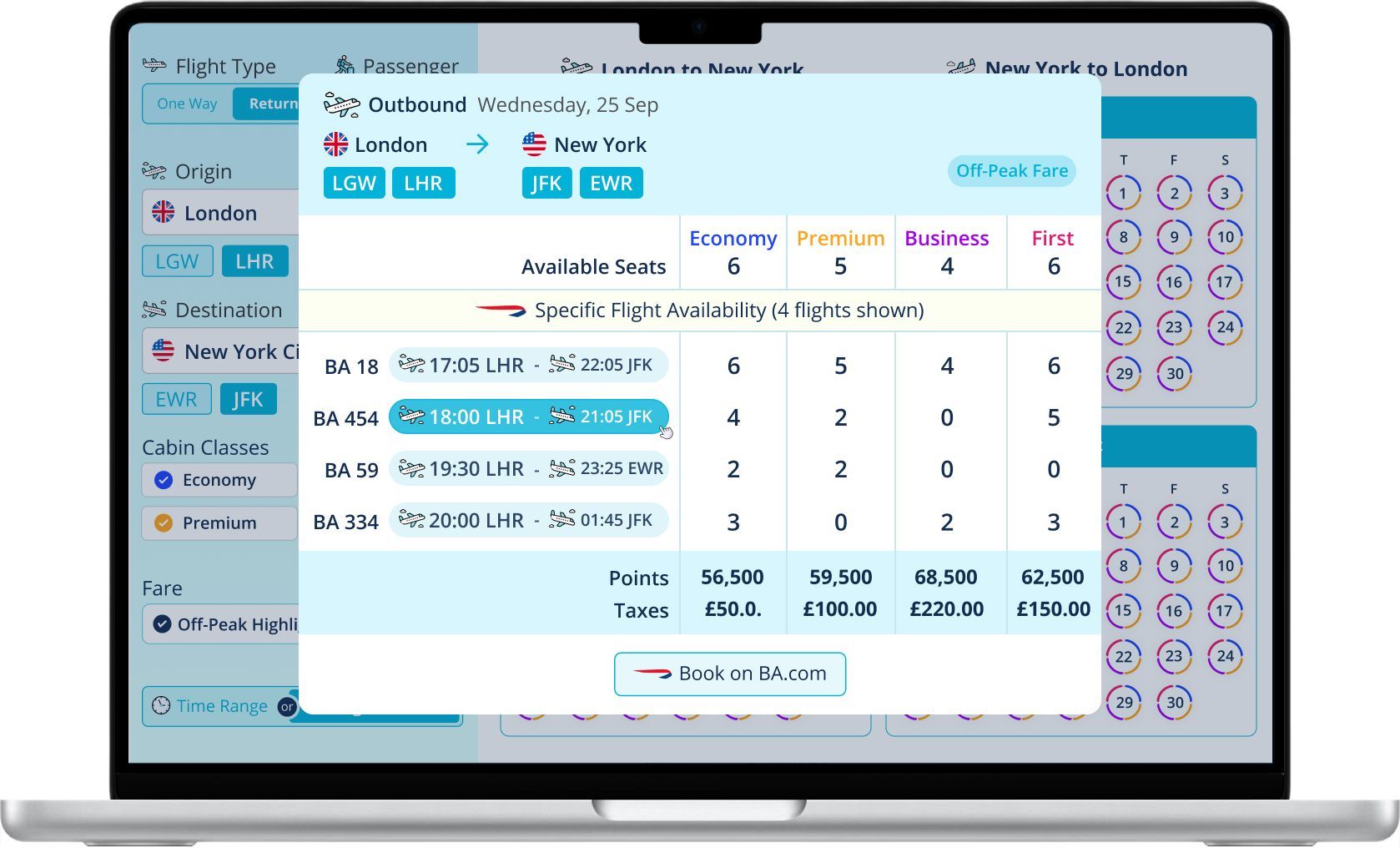
The ten Avios travel destinations above span Economy short-haul redemptions of 20,000 Avios (Paris) to Business Class long-haul redemptions of 319,000 Avios (Australia). The connecting thread is that the Avios cost is structurally lower than the equivalent cash fare, and the difference is most obvious at the premium-cabin end of the range. These are also some of the most rewarding ways to spend Avios if you’re looking for a meaningful trip.
A few things worth knowing before you search:
The Avios travel inspiration behind this list is the same as the literary travel inspiration behind every book on it: sometimes, the best reason to go somewhere is that a story made you want to. Once you've found your destination, let the book do the rest.
Affiliate Disclaimer
Reward Flight Finder (RFF) may receive a commission if you book or purchase through some of the links on this page. This does not affect the properties or services we feature or how they are presented.
We aim to provide accurate and up-to-date information, however, prices, availability and terms change frequently. You should always check the official website of the property or provider directly for current prices and booking terms before you book.